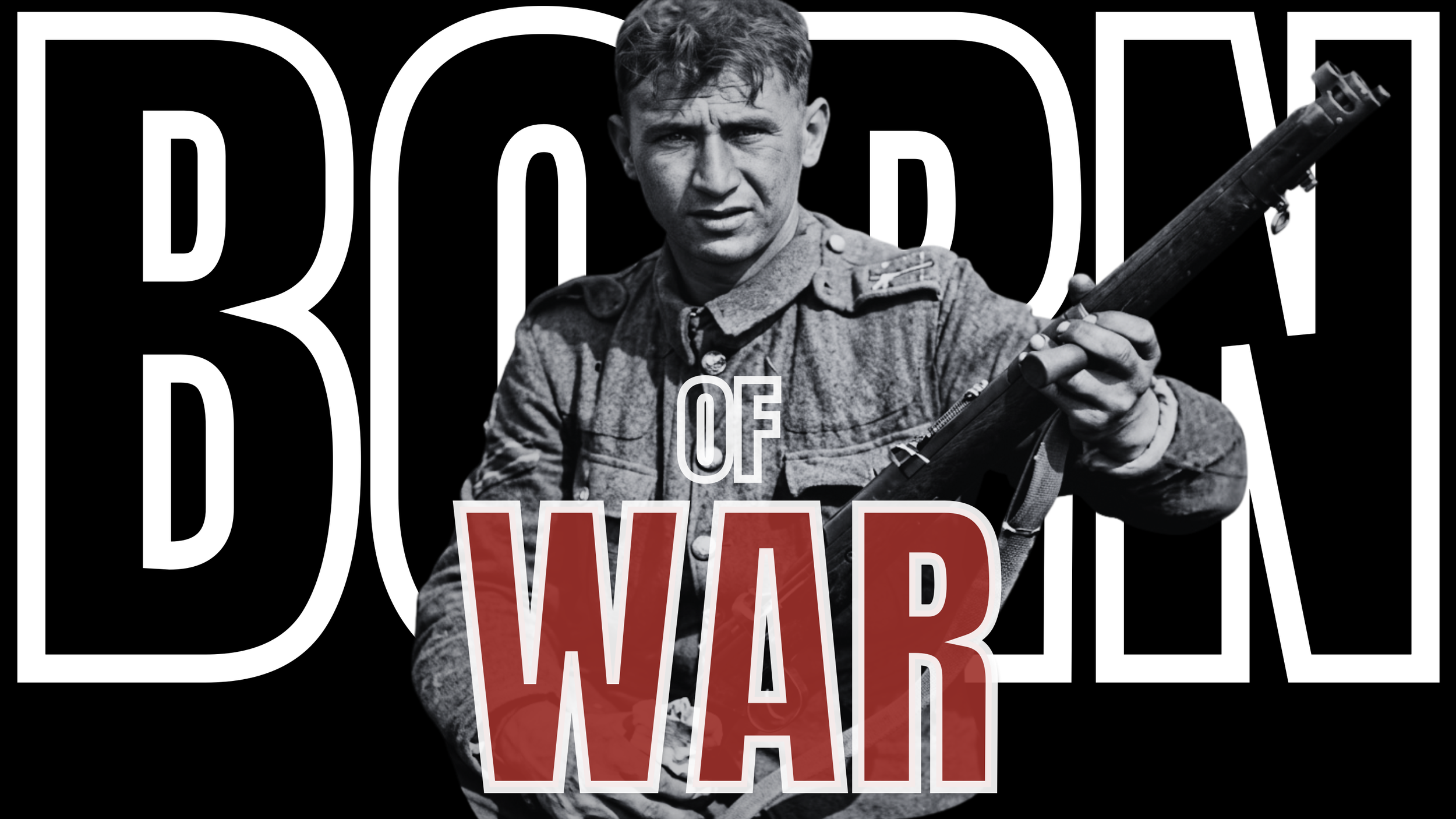
“Britain today is in danger of forgetting what we owe our armed services, and of overlooking their role in liberating people all over the world from tyranny. We are, in fact, in danger of losing our history. This film gives it back to the millions of families who contributed husbands, sons and brothers to wars for democracy and freedom” -
Professor Lawrence Goldman, St. Peter's College, Oxford. The Editor, The Dictionary of National Biography, 2004-14
Our Mission: Completion & Release
Fundraising
The primary remaining cost is licensing archive footage from the Imperial War Museum, photographic agencies and news organisations. A secondary cost is filming on location, from scenes of battle to Commonwealth War Grave Commission cemeteries. Third, there is potential for filming small scale re-enactment – if sufficient funds are raised. Every donation makes a difference.
01Production
The short introductory clip uses AI imagery. For the completed film, the aim is to conclude on location filming this autumn, thereby enabling editing - which will include limited use of AI - and the rest of the post-production process to be completed by spring 2027.
02Screening and Legacy
After completion, premieres and screenings are being held, from which all proceeds go to our service charity partners, which also receive more than a third of any profits generated following commercial release.
BORN OF WAR is additionally being made available to military and other museums, including the National Army Museum.
03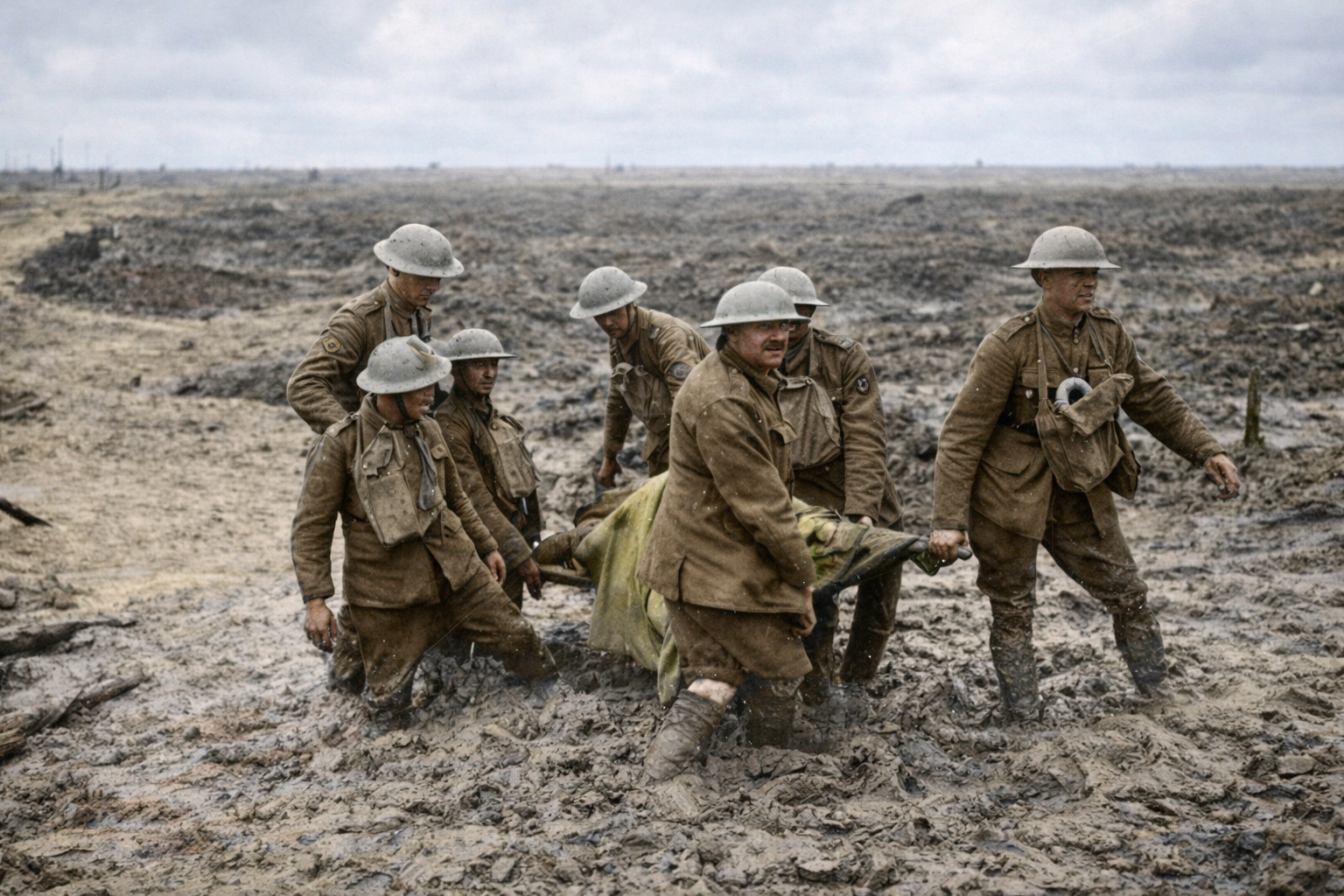
The oldest of those interviewed began their working lives at 14, most of them in the mines of South Wales, coming of age in a world defined by the totalitarianism of Soviet Russia and Nazi Germany. Their testimony includes the last first-hand accounts from the British Expeditionary Force. Little over 150,000 strong when sent to France in 1939, the B.E.F. faced the Wehrmacht which by then already numbered 2.7 million – a disparity facilitated by the policy failures of successive British governments and which, in 1940, pitted pockets of British soldiers against entire Panzer divisions.
Most of that generation never expected to put on uniform. It is these men who, in tandem with those who had been regular soldiers, recall the campaigns in North Africa, Italy – where the ‘D Day dodgers’ faced the enemy at Monte Cassino and across the spine of mountains that run almost unbroken along the length of the country – and in north-west Europe, where the armoured divisions forced their way through the bocage country of Normandy and on, through the Low Countries, into Germany.
Subsequent generations – those of the so-called post-war world – detail experiences of different kinds of conflicts: those in societies defined by transient allegiances, with enemy forces shorn of uniform, blending into the civilian population at will. It includes testimony from those who served in Northern Ireland in the 1970s – men who were only to open fire according to rigid rules of engagement. Rules, they were told, which were enshrined in law – a fiction which dissolved in subsequent decades as veterans became courtroom fodder for a political class which had no concern for those it hounded nor any comprehension of the debt it owed them.
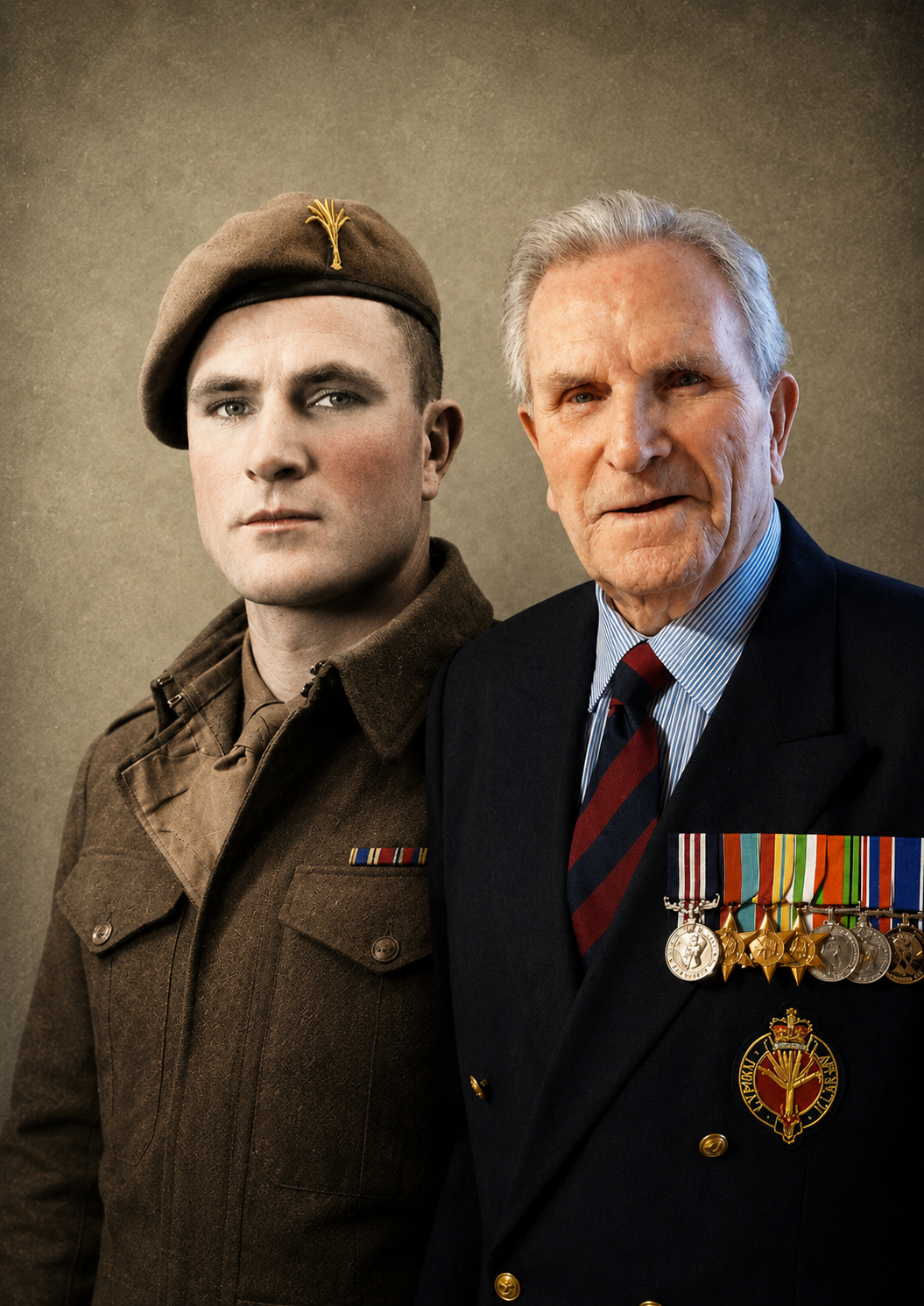
BORN OF WAR concludes in Afghanistan with a Battle Group comprising elements from - among others - the Army Air Corps, the Coldstream Guards, Scots Guards, Irish Guards, Parachute Regiment the Royal Tank Regiment, the Mercian Regiment, the Princess of Wales’s Royal Regiment, The Rifles, the Yorkshire Regiment, the Royal Marines, the Royal Artillery, the Royal Engineers, the Royal Logistic Corps, Territorial Army, with the Welsh Guards supplying the largest contingent and Battle Group Commander. They were succeeded by a Grenadier Guards Battle Group.
Forging the Unbreakable:
Jock Lewes, the Welsh Guards, and the Birth of the SAS
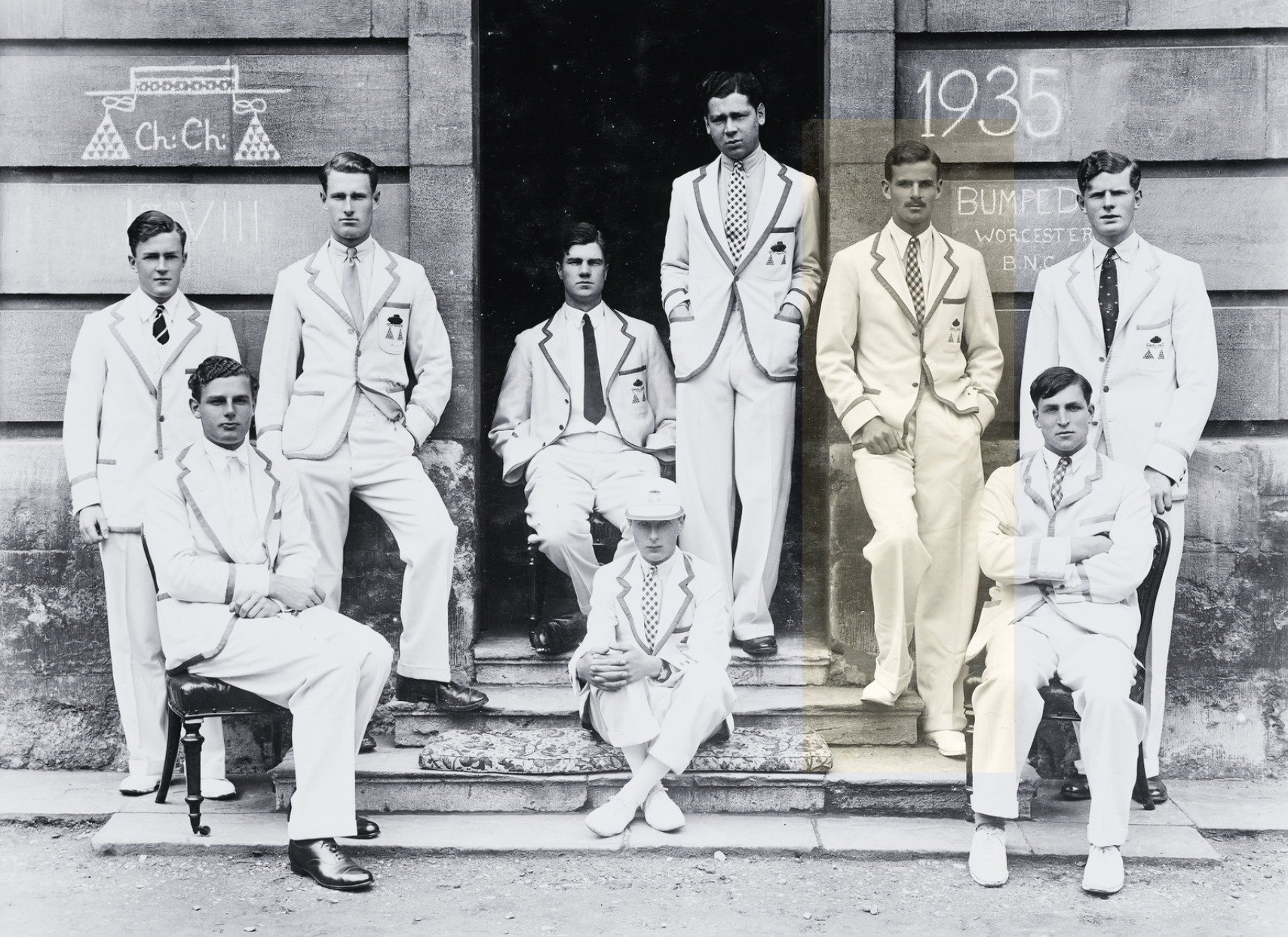
© Christ Church, Oxford
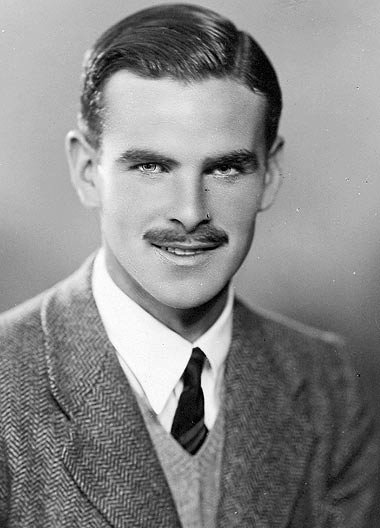
Jock Lewes (left and highlighted above) was ‘a man apart,’ according to a brother officer in the Welsh Guards and the SAS. In the assessment of Ben Macintyre, author of Rogue Heroes, he was a ‘single-minded predator’. His own sister concluded that he ‘modelled himself on Christ’. Always pushing himself beyond conventional limits, he required others to do the same. As weapons training officer of the 2nd Battalion Welsh Guards, he stipulated that the objective of its Training Cadre was ‘to make and keep available to the service battalions the best trained reserve in the Brigade. Any endeavour falling short of this is unworthy of the sacrifices of those who are upholding the tradition of the Regiment in battle.’
Later, in the North African desert, rationing himself to one water bottle a day, he instituted what became known as ‘Lewes Marches’. These were undertaken – as his nephew and biographer, John Lewes, recorded – ‘without vehicle, medical or radio support so that soldiers could be independent of transport deep inside enemy lines. He did not inform his superiors of his experiments.’
Ernie Bond, David Stirling’s platoon sergeant in both the Scots Guards and the SAS, later wrote:
‘David Stirling wanted all the action without the preparation and training. I wonder whether David would have ever survived without Jock. None of the other officers were of Jock’s calibre.’
“The testimony of the old soldiers – hardly more than boys when they were serving – is piercingly touching and gripping: almost unbearably moving. This is a film that should be watched by all ages as a celebration of bravery and endurance” -
Dame Joanna Lumley

Donations
All those donating £20 or $25 (USD) or more are being listed in the credits for BORN OF WAR (unless they express a preference for remaining anonymous). Donors are additionally invited to nominate someone in whose memory their donation is made, whether the dedicatee was killed in action or on operations or served and survived. Dates, rank, number and gallantry awards can be listed, as can details of regiment or, if from the R.N. or R.A.F., ship or squadron.
Donors may also nominate those who served in Allied forces at any point in the past century, from World War I through to Afghanistan, as well as those in Occupied Europe who were condemned to concentration or labour camps in World War II.
If donating via our GoFundMe page, please return and complete this form (unless making an anonymous donation without a dedicatee). But don't worry if you forget: we'll do our best to list all names recorded by GoFundMe in the BORN OF WAR credits.
In exceptional cases, the producers reserve the right to seek verification of donor and/or dedicatee details.

"Just now and again a film appears that tells a remarkable and riveting story. ‘Born of War’ is such a film. I urge you to give all the support you can, so as to see the film through to completion, thereby ensuring that the sacrifices of successive generations are brought to the attention of a wider public which now, alas, too readily takes freedom for granted" -
Frederick Forsyth, 1938-2025
TOLD BY THOSE WHO SERVED
OUR CHARITY PARTNERS

The Royal British Legion is the backbone of the UK’s Armed Forces community, providing lifelong support to veterans, service personnel, and their families. From expert recovery care and financial advice to fighting for the rights of those who served, the Legion ensures that no one is left behind after their service ends.
By wearing the poppy, we do more than remember the fallen; we fund vital services that change lives today. Together, we can honor their sacrifice and protect their future.
When a parent dies, a child’s world is upended. For military families, this grief often includes losing their connection to the Armed Forces community. Scotty’s Little Soldiers steps in to bridge that gap, ensuring bereaved children never feel forgotten.
With 2,100 military children newly bereaved every year, the need for long-term support is critical. Scotty’s provides a vital lifeline—offering emotional health support, educational grants, and community events that honor their parents' service.
Together, we can ensure no child grieves alone.

Combat Stress is the UK’s leading charity for veterans' mental health, providing specialized clinical treatment for those living with complex trauma. For over a century, they have helped former service personnel tackle conditions like PTSD, anxiety, and depression. Their vital work ensures that the invisible injuries of war are never ignored.
By offering a 24-hour helpline and evidence-based therapy, Combat Stress helps veterans reclaim their lives. Together, we can support those who sacrificed their mental wellbeing for our safety.

Blesma, The Limbless Veterans, is dedicated to assisting serving and ex-Service men and women who have suffered life-changing limb loss or the loss of use of limbs. Since World War I, they have provided specialized support, rehabilitation, and advocacy for those who have sacrificed their mobility in the line of duty.
Through peer support and financial assistance, Blesma helps veterans lead independent and fulfilled lives. Together, we can ensure that those who gave so much are never left to struggle alone.